The New Brunswick Arts Board is an arm’s length arts funding agency with a legislated mandate to facilitate and promote the creation of art as well as administering funding programs for professional artists in the province.
Join our mailing list
Home » News » Blog » Ceramic artist Darren Emenau explores the synthesis between organic and artificial
Ceramic artist Darren Emenau explores the synthesis between organic and artificial
By Darren Emenau
I’m lucky to call the west side of Saint John home, where I live with my wife, Nora, our 13-year-old daughter Lucy, and our two black furry friends – Arlo, our one-year-old lab, and John the cat. Nora and I both come from creative backgrounds, so art, design, and craft have always been part of our home life. Lucy seems to have inherited that same creative spark and is usually busy making, building, or deconstructing something of her own. Living close to the ocean, river and woods has shaped so much of my work over the years, and I honestly think New Brunswick is one of the best places to live and create.
When I’m not in the pottery studio, I usually have a dozen other projects on the go – renovations, restoring retro trailers and wooden boats, carving wooden spoons, or anything else that lets me work with my hands. I love hiking, boating, camping, sailing, biking, and skiing – anything to get outside and appreciate the seasons.
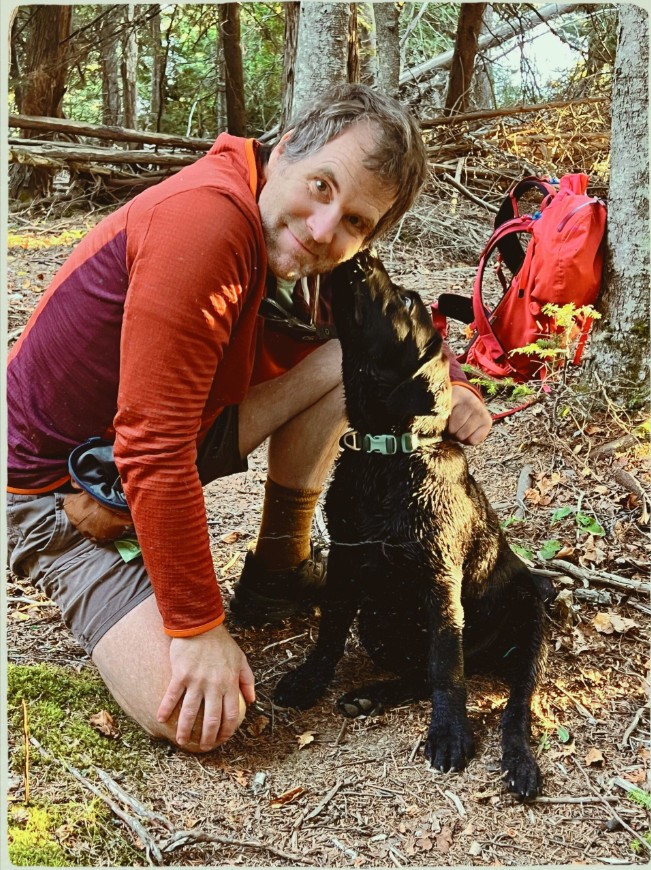
Darren and Arlo
I graduated from New Brunswick College of Craft and Design (NBCCD) in 1997 but stuck around for another three years as a technician and teacher. Looking back, that extra time was incredibly important for me creatively. I had originally trained as a functional potter — bowls, mugs, production work — but I already knew I wanted to move beyond that and experiment more. I needed time to take risks, make mistakes, and figure out where the work could go outside of a production mindset. Throughout the years I attended various ceramic workshops, which became extremely handy in the way I create.
While I was at NBCCD, I also completed my biology degree through the University of New Brunswick and Concordia University, which probably explains why nature keeps finding its way into everything I make. The science background helped in unexpected ways too, especially with glaze chemistry and material experimentation.
Since then, my work has evolved through experimenting with local materials, firing methods, textures, and building techniques. A lot of it still comes back to New Brunswick — the coastline, mossy forests, rocks, fog, weather, and all the textures that naturally exist here. My work has shifted over time further away from traditional functional pottery and toward more abstract sculptural forms, although traces of vessels and containment still remain.
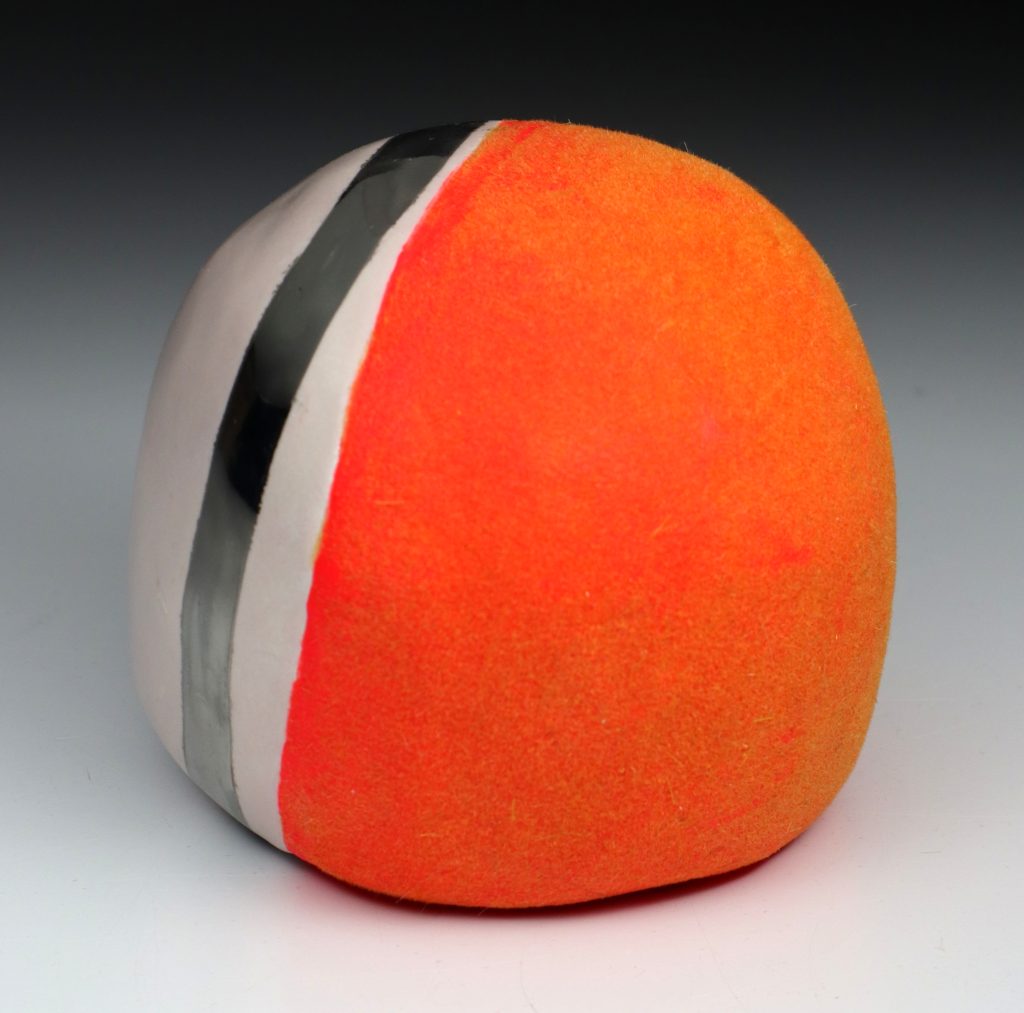
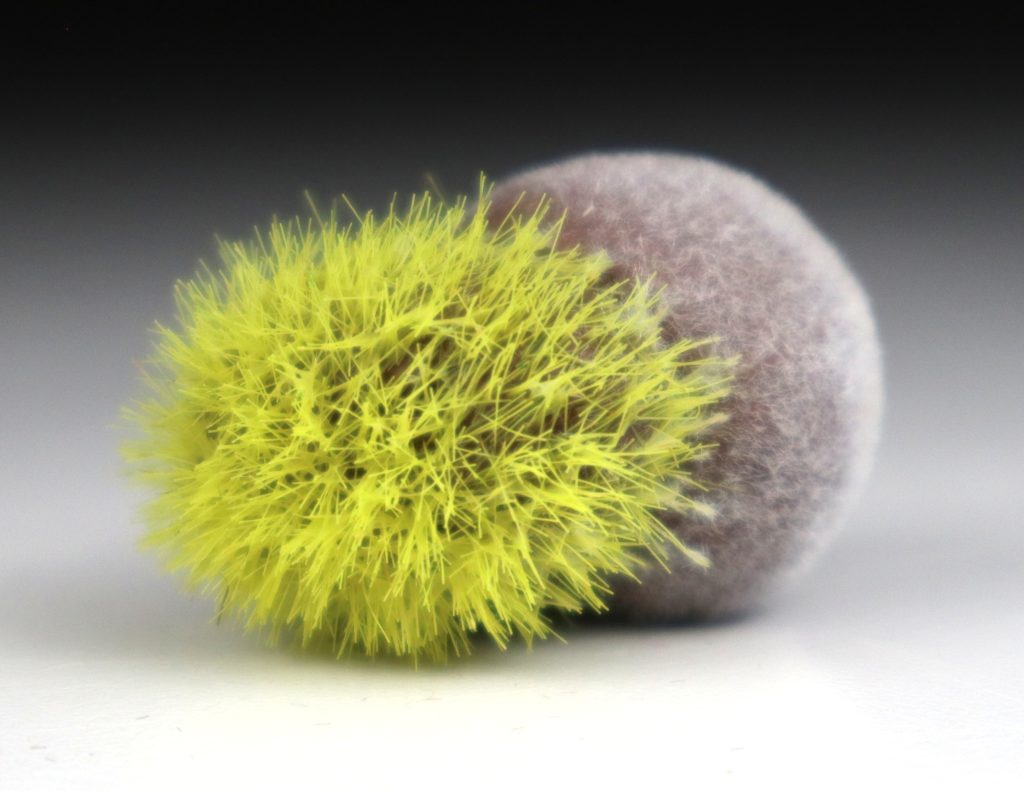
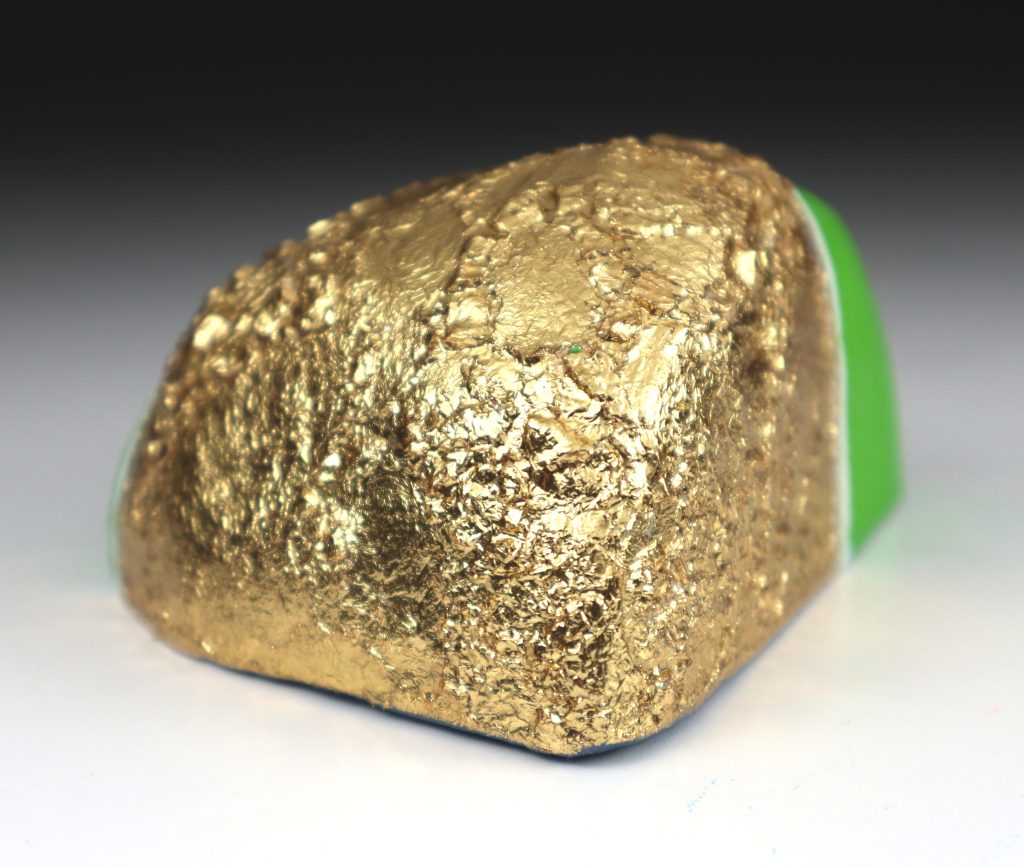
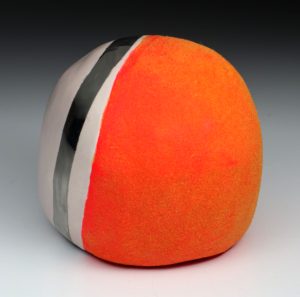
Lately I’ve been especially interested in the relationship between natural systems and technology, which led into my current body of work, Regenerative. The series explores how organic and synthetic worlds are beginning to blur together. Some pieces feel biological or geological, while others lean into metallic surfaces, artificial colour, velvet-like textures, and reflective finishes that feel futuristic or manufactured. I became fascinated by the tension between those worlds and how they can coexist within the same object.
Regenerative 19dRegenerative 02Regenerative 01
I received the artsnb Creation Grant for Regenerative in December 2025, and it opened up a whole new level of experimentation with colour, texture, metallic surfaces, and layered materials. The work has become more ambitious and exploratory than anything I’ve done before. Some sculptures exist as individual forms, while others function as modular installations or paired works that interact with each other.
A big part of the process has been experimenting with colour relationships inspired by artists like Mark Rothko and Josef Albers — looking at how colours shift depending on what sits beside them, how matte surfaces absorb light while metallic finishes reflect it back, and how texture changes the emotional feel of colour entirely. I’ve been combining porcelain with acrylic, natural fibres, flocking, gold and silver leaf, industrial finishes, and layered glazes. At times the surfaces almost feel alive, or like they’re still transforming.
Honestly though, a huge part of this project has been failure — both literal and creative. Some experiments worked beautifully, while others completely collapsed. I’ve ruined surfaces by applying materials too early, overworked pieces until they lost their energy, and spent weeks trying to recover work that probably should have been abandoned earlier. One of the hardest parts has simply been knowing when to stop, but that uncomfortable stage is often when the best discoveries happen.
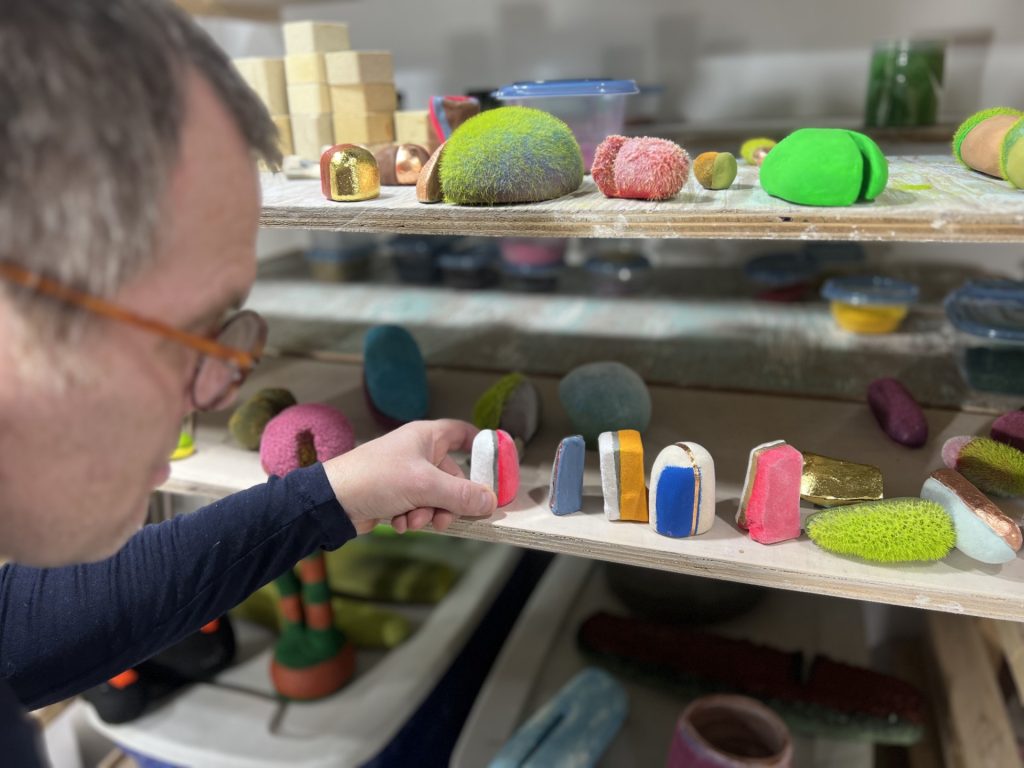
Darren in his home studio
So far, I’ve created more than 140 works within Regenerative, with a solo exhibition planned at ArtsPlace in Annapolis Royal in December 2026. Even after all these years, I still feel like I’m figuring things out — and honestly, that’s part of the fun. The material keeps surprising you if you let it.
As a provincial entity, the New Brunswick Arts Board acknowledges that it carries out its work on the traditional unceded territory of the Wolastoqiyik, Mi’kmaq and Peskotomuhkati peoples. Read the full statement.